



Cargo packaging requirements
Packaging directly affects cargo safety and integrity, as well as whether a carrier will accept it for shipment. In this section, we have compiled basic requirements for containers and labeling to ensure your cargo passes inspection smoothly and reaches the consignee in proper condition.

Special cargo categories
Not all cargo is the same: some types require special conditions for transportation, storage, and documentation. These include perishables, heavy and oversized cargo, high-value items, odorous goods, and several other categories. Here we briefly describe the main types of special cargo and what to consider when shipping them.

Dangerous goods
Dangerous goods are the most sensitive category for carriers and regulators. Incorrect classification, packaging, or labeling can lead not only to delays but also to fines and transport bans. In this section, we explain the basic principles of handling dangerous goods and when you must consult with us.

Dimensional weight and shipping cost
When calculating shipping costs, it is important to consider not only the actual weight but also the volume of the cargo. Lightweight but bulky shipments take up significant space on a vehicle, so they are charged based on dimensional (chargeable) weight. Here we explain how it is calculated and how to avoid overpaying for delivery.
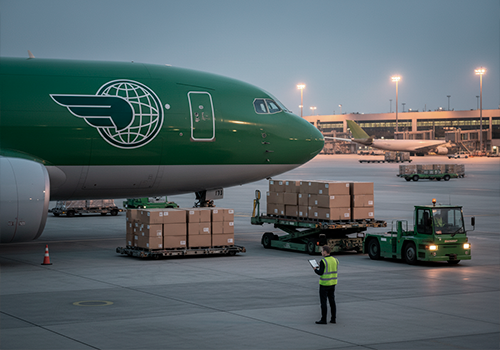
Organizing air cargo shipments
Air freight is the fastest way to deliver over long distances, but also one of the most regulated. Shippers need to understand the basic steps: what information is required at the outset, what documents are processed, how flights are selected, and what determines transit times. This section answers the most common questions about air shipments.